
For many Seattle businesses, the website decision starts with a practical question: should you invest in a custom website or launch faster with a template-based build? On the surface, the answer often looks simple. Templates seem cheaper and quicker. Custom websites seem more flexible and more expensive. In reality, the better choice depends on how the website supports your growth, your operations, your brand positioning, and your long-term marketing strategy. That makes web design Seattle a business decision, not just an aesthetic one.
This matters because a website is rarely just a digital brochure anymore. It supports SEO, paid campaigns, lead generation, brand credibility, user experience, CRM workflows, and future content expansion. In Seattle, where many businesses compete in service-heavy, professional, and digitally mature markets, the difference between a site that looks acceptable and a site that actually performs can become significant over time.
A template website may be enough for a business with a narrow offer, a short launch timeline, and minimal structural complexity. A custom website Seattle strategy may be the stronger investment when the business needs deeper flexibility, stronger conversion paths, better differentiation, and a website architecture that can grow with the company.
That is why the comparison between custom and template-based development should not be framed as design preference alone. It is a business decision. It affects how your site ranks, how your pages convert, how easy the site is to maintain, and how well your brand stands out in a competitive market.
In this article, we will break down the difference between custom and template websites, explain what Seattle businesses should consider before choosing either route, and show how a connected web development team approaches this decision as part of a broader digital growth strategy.
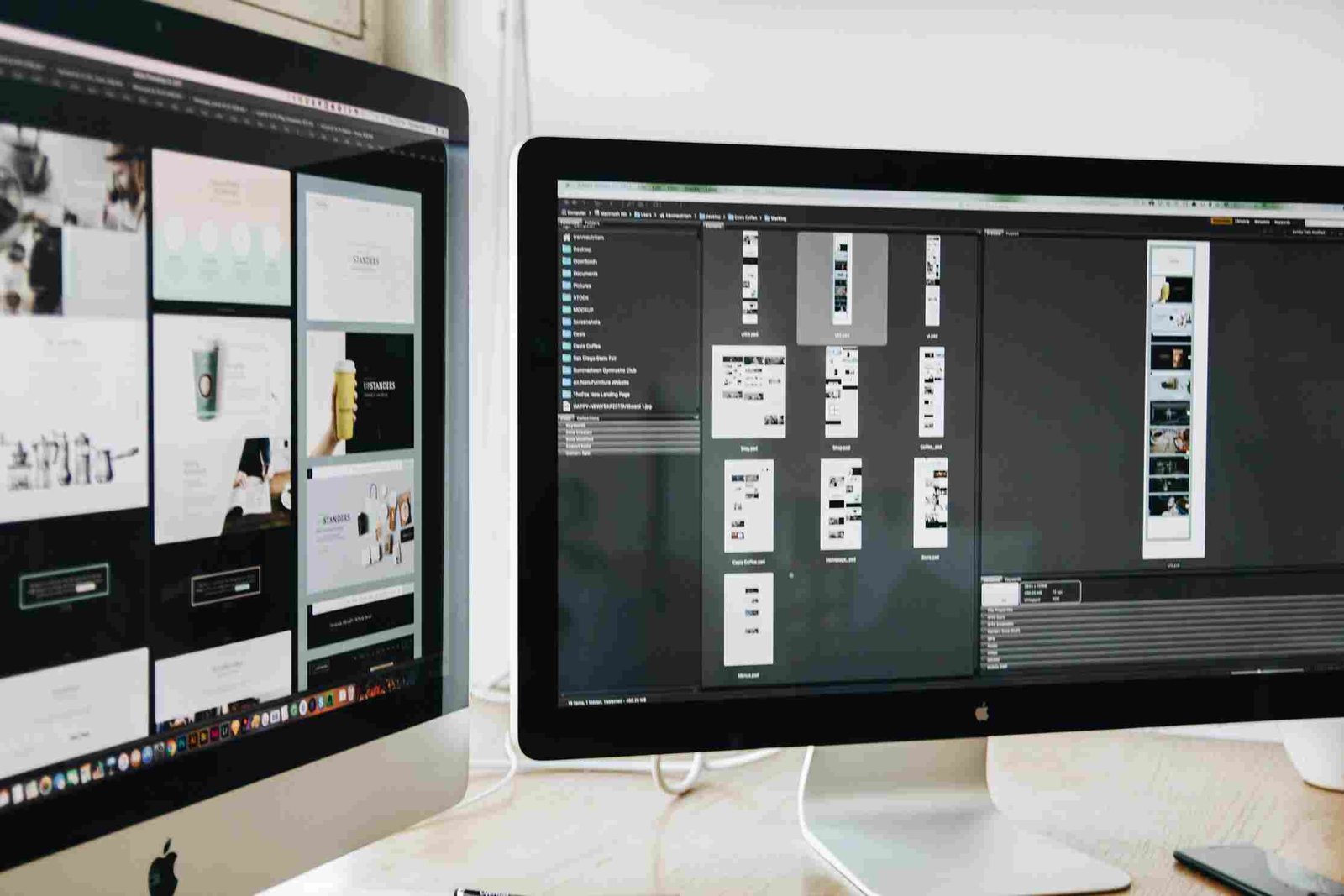
What is the real difference between a custom website and a template website?
The short answer is structure and flexibility.
A template website is built using a pre-designed layout or framework. The design system, page structure, and many visual decisions already exist before your brand is applied. You usually customize colors, content, images, sections, and sometimes certain layout modules, but the base logic of the website is already defined.
A custom website is designed and developed around your business requirements from the beginning. That includes the page structure, visual hierarchy, user flow, content architecture, functional needs, and conversion logic.
In practical terms:
A template website usually offers:
- faster setup
- lower upfront cost
- predefined layouts
- easier early launch
- limited structural flexibility
A custom website usually offers:
- tailored page architecture
- better flexibility for brand positioning
- more control over UX and conversion flow
- stronger support for complex functionality
- better long-term scalability
This is why website development Seattle decisions should not be based only on launch speed. The right question is how much the website needs to do for the business over the next one to three years.
Why does this decision matter more in Seattle?
Seattle is a market where many businesses operate in competitive digital environments. Companies in healthcare, legal services, consulting, SaaS, home services, real estate, B2B, and professional services are not only competing on service quality. They are also competing on digital clarity, trust, speed, and user experience.
A weak website can affect:
- first impressions
- lead generation
- paid campaign efficiency
- SEO performance
- brand credibility
- content expansion
- customer confidence during the evaluation stage
That is why the custom-versus-template decision matters more than many companies expect. In a lower-competition market, a basic template may perform well enough for a longer period. In Seattle, where the website often plays a direct role in how leads compare providers, the structural quality of the site can influence business results more quickly.
This is especially true when a business invests in web design Seattle, local SEO, Google Ads, content strategy, or conversion-focused landing pages. The website becomes part of a bigger system. If the base structure is weak, that system becomes harder to scale.
What is a template website best suited for?
Template websites can be a smart option in the right context. They are not automatically low quality. The issue is not that templates are bad. The issue is that templates are often used in situations where they no longer fit the business requirements.
A template website may work well when:
The business needs to launch quickly
A company that needs an online presence fast may benefit from the shorter production timeline.
The site structure is simple
If the business has a small number of pages and a narrow service offering, a template may provide enough structure.
Budget is limited in the early stage
For new businesses or early-stage operations, a template site can create a reasonable first version without requiring a large upfront investment.
The brand differentiation needs are still basic
If the business is still refining positioning and does not yet need a highly differentiated digital experience, a template can be acceptable for the short term.
Content growth expectations are modest
If the site will remain relatively stable and will not require large-scale expansion, the limitations of a template may not become urgent immediately.
For some local businesses, a template can be a practical starting point. The problem appears when that starting point is treated as if it can support every future need without compromise.
What is a custom website best suited for?
A custom website Seattle approach becomes more valuable when the website needs to function as a business asset rather than a simple online presence.
Custom development is usually a stronger choice when:
The business competes in a crowded market
Differentiation matters more when many companies offer similar services. A custom website helps shape a clearer brand impression and a more deliberate user journey.
The site must support lead generation seriously
If the website is expected to generate inquiries, bookings, consultations, or sales, then page structure and conversion logic matter much more.
The company offers multiple services or audience paths
Businesses with layered offers, service categories, audience segments, or local pages often need more flexible architecture than templates can comfortably provide.
SEO is a long-term priority
Custom site structure often supports cleaner hierarchy, stronger landing page logic, better template control, and more scalable content strategy.
Integrations matter
If the site needs to work closely with CRM systems, booking tools, custom forms, automation flows, analytics, or business operations, custom development becomes more valuable.
Brand perception is part of the sales process
In high-trust sectors such as healthcare, consulting, legal services, and B2B, the website often influences credibility directly. A custom approach can shape that impression more effectively.
This is where Seattle web design and business strategy intersect. The more the website affects growth, trust, and internal workflows, the more likely a custom build becomes the stronger long-term choice.
Web design Seattle: custom vs template design flexibility
This is one of the most visible differences.
A template website gives you a design system that already exists. You are adjusting it to fit your brand. In many cases, this is enough for straightforward presentation sites. Still, the deeper you try to modify the structure, the more limitations appear.
A custom website starts from the opposite direction. The design is built around:
- your content priorities
- your service structure
- your audience behavior
- your conversion goals
- your brand positioning
That creates advantages such as:
- more original layout logic
- better control over page flow
- more deliberate emphasis on high-value sections
- stronger consistency with brand strategy
- fewer compromises in UX structure
For businesses investing in web design Seattle, this matters because visual quality is not just about attractiveness. It is about how clearly the website supports decision-making. Research from the Nielsen Norman Group shows usability has a direct effect on whether visitors trust a site and take action. A strong custom design can make the next step feel obvious. A template often makes the page look acceptable, but not necessarily optimal for your exact business.
Which option is better for SEO in Seattle?
In many cases, custom websites offer stronger long-term SEO support, but the full answer depends on how each site is built.
A template site can support SEO if it has:
- clean code
- good performance
- proper heading structure
- editable metadata
- mobile responsiveness
- flexible content sections
- scalable page logic
Still, many template-based websites create SEO limitations later, especially when the business wants to expand content architecture, create targeted landing pages, improve internal linking, or support more advanced technical structure.
A custom build is often stronger for SEO because it allows:
- cleaner information architecture
- more control over template types
- better page hierarchy
- more flexible content modules
- stronger local SEO landing page structure
- better integration with future growth plans
For Seattle companies targeting local and commercial search visibility, this becomes important quickly. A business website Seattle companies want to rank well should not only look polished. It should be structurally ready for optimization. The structural side is covered in our guide to technical SEO in Seattle.
This is one reason web development should not be treated separately from digital growth. Site decisions affect SEO from the beginning, not only after launch. For the local side specifically, see our guide to local SEO in Seattle.
Which option converts better?
A custom website usually has the advantage when conversion is a serious business goal.
That is because conversion depends on:
- page structure
- trust signals
- content flow
- CTA placement
- friction reduction
- visual hierarchy
- mobile clarity
- alignment with user intent
A template can still convert well, especially if the offer is simple and the audience path is short. Still, custom websites usually perform better when conversion pathways need more precision.
Examples include:
- consultation booking
- service inquiry forms
- multi-step lead qualification
- local service page conversion
- high-ticket offer presentation
- B2B decision journeys
A custom website allows the business to shape the path around real behavior instead of adapting the business to the template’s existing layout logic.
For many Seattle companies, this is one of the strongest reasons to choose custom development. The site is not there only to describe the business. It is there to move users toward action.
How do cost and value compare?
Templates usually cost less upfront. Custom websites usually create more value long term when the website plays a central role in growth.
Template website cost profile
- lower initial investment
- faster deployment
- lower short-term complexity
- potentially higher compromise later
- possible rebuild costs when business needs expand
Custom website cost profile
- higher initial investment
- more planning required
- stronger long-term flexibility
- less structural compromise
- better fit for growth-focused systems
The wrong way to compare them is simply by asking which one is cheaper.
The better comparison is:
- What does the business need the site to do?
- How long should the site remain effective?
- How important are SEO, PPC, branding, content, and integrations?
- How expensive would it be to outgrow the site too quickly?
A template may save money upfront and lose value later if it creates limitations in lead generation, SEO growth, or maintenance. A custom site may cost more initially and perform better over a longer period.
How do maintenance and scalability differ?
This is where the long-term difference becomes clearer.
A template website can be easy to maintain when the site stays close to the original intended structure. Once the business starts adding new service paths, changing layouts heavily, or expanding content strategy, the system often becomes harder to manage.
A custom site usually scales more cleanly because the templates, modules, and content logic are designed around the business from the beginning.
Custom sites often support:
- future page types
- content expansion
- more flexible service pages
- stronger landing page development
- cleaner integration with marketing systems
- easier growth into new campaigns or offers
A website development Seattle project should not be judged only by how the site launches. It should also be judged by how easily it can evolve.
That is especially relevant in Seattle markets where businesses often grow into more structured content, local SEO, paid media, and CRM-connected workflows over time.
When does a template become a liability?
A template becomes a liability when the business begins forcing strategic needs into a structure that was never designed for them.
Common signs include:
- awkward navigation expansion
- repetitive page layouts that do not fit user intent
- poor mobile behavior after modifications
- slow performance due to heavy builder logic
- limited SEO flexibility
- dependence on plugins for basic needs
- inconsistent design after multiple changes
- difficulty creating high-converting landing pages
At that stage, the business may still technically have a functioning website, but the site starts resisting growth rather than supporting it.
This is one reason some companies end up paying twice. They launch with a template to save time, then rebuild sooner than expected once the business outgrows it.
When is a custom website not necessary?
A custom site is not always the right first move.
It may be unnecessary when:
- the business is still validating the offer
- the website is mainly informational for now
- traffic volumes are still low
- there is no immediate SEO or PPC scale plan
- budget is genuinely better allocated to market testing first
- the service structure is very simple
- internal workflows do not require deeper functionality yet
This is an important point because custom development should be chosen for the right reasons, not out of prestige.
A custom site creates value when the business can use that flexibility meaningfully. If the business is still early and testing positioning, a strong template-based first version may be the smarter move. The key is making that choice intentionally, not by default.
How should Seattle businesses decide between custom and template?
A useful decision usually comes down to six questions. If you are also choosing who will build it, see our guide on how to choose a web development company in Seattle.
1. How important is the website to revenue?
If the site is a real acquisition channel, custom often becomes more valuable.
2. How complex is the service structure?
The more layered the offer, the more useful custom architecture becomes.
3. How important is SEO growth?
If SEO is a central channel, the site needs stronger structural support.
4. How much differentiation does the brand need?
In crowded Seattle markets, stronger digital distinction often matters.
5. Will the site need integrations or automation?
Custom development becomes more useful when internal systems connect to the site.
6. How soon might the business outgrow a basic structure?
A template may be fine today and limiting in twelve months.
These questions are more useful than asking which option is “better” in general. The better option is the one that fits the real role of the website inside the business.
What mistakes do businesses make when choosing?
Several mistakes are common.
Choosing based only on launch cost
This often ignores the cost of future limitations.
Overbuilding too early
Some businesses invest in custom complexity before they actually need it.
Underestimating growth requirements
Other businesses assume a template will remain enough even when the marketing plan clearly requires more.
Treating all templates as equal
Some template builds are thoughtful and clean. Others are bloated and fragile.
Ignoring SEO and conversion strategy
A site decision made without marketing input usually creates performance issues later.
Choosing visuals over structure
The homepage look should never be the only basis for the decision.
A strong partner should help the business avoid both extremes: overbuilding without need and underbuilding without a plan.
How does DevedUp web development approach this decision?
DevedUp web development approaches the custom-versus-template decision as a business strategy question, not just a design question.
That means the process usually begins by understanding:
- the role of the site in lead generation
- the growth plan for SEO and PPC
- the content structure required
- the service hierarchy
- the need for integrations or automation
- the brand’s need for differentiation
- the pace at which the business expects to expand digitally
For some companies, the right recommendation is a template-led site with stronger structure, cleaner performance, and a clear path for future upgrades. For others, a custom website Seattle solution is the better investment because the site needs to function as a growth engine from day one.
Because DevedUp Business & Marketing also works across SEO, PPC, content, CRM, and digital strategy, the website decision can be evaluated within the full performance system rather than in isolation.
That usually leads to better outcomes because the site is built around how the business actually acquires and converts demand.
So which one is better for Seattle businesses?
There is no universal answer.
A template website is better when speed, simplicity, and early efficiency matter most. A custom website is better when the site must support serious growth, deeper brand differentiation, more complex conversion paths, and stronger long-term digital flexibility.
For many Seattle businesses, the practical answer is:
- choose a template if the website is a first-stage launch tool
- choose custom if the website is a long-term growth asset
- choose based on business requirements, not trend preference
That is the real comparison.
Conclusion
The choice between a template site and a custom website Seattle strategy is not really about which option looks more premium. It is about which structure supports your business more effectively over time. A template can be a smart solution when the site is simple, the launch needs to happen quickly, and the business is still early in its digital growth. A custom build becomes more valuable when the website plays a central role in SEO, conversion, brand positioning, and future scalability.
For Seattle companies investing in web design Seattle, website development Seattle, and stronger digital performance, the smarter decision usually comes from understanding the real job of the site. A business website Seattle companies rely on should not only exist online. It should support growth, trust, usability, and long-term flexibility.
Businesses evaluating Seattle web design options should look beyond short-term convenience and consider how the site will perform as marketing, content, and operational needs grow. A team that aligns development choices with broader digital strategy helps brands choose between template efficiency and custom structure based on what the business actually needs to scale.
Frequently asked questions
Is a custom website better than a template for SEO?
Often, yes, over the long term. A template can support SEO with clean code, good performance, proper headings, and editable metadata. But custom builds usually allow cleaner information architecture, better page hierarchy, stronger local landing page structure, and more room to expand content — which matters most for businesses treating SEO as a serious growth channel.
How much does a custom website cost compared to a template in Seattle?
Templates cost less upfront and deploy faster; custom sites require more planning and a higher initial investment. The more useful comparison is value over time: a template can lose value later if it limits lead generation, SEO, or maintenance, while a custom site often performs better across a longer period when the website is central to growth.
When should a Seattle business choose a template website?
A template can be the smart choice when the business needs to launch quickly, the site structure is simple, the budget is better spent on market testing first, brand differentiation needs are still basic, and content growth expectations are modest. The key is choosing it intentionally rather than by default.
Can a template website be upgraded to a custom one later?
Yes, but it often means a rebuild rather than a simple upgrade. Some businesses launch on a template to save time, then rebuild sooner than expected once they outgrow it. Planning a clear upgrade path from the start — clean structure, good performance, editable content — makes that transition smoother and less costly.
Does web design affect conversions?
Strongly. Conversion depends on page structure, trust signals, content flow, CTA placement, friction reduction, visual hierarchy, and mobile clarity. A well-designed site makes the next step feel obvious, while a generic layout can leave even good traffic underperforming, especially for booking, lead forms, and higher-value offers.
Is it time to choose the right website model for your business?
If your company is comparing custom website Seattle options with template-based website development Seattle, the best next step is to evaluate what the website must actually do for your business over the next stage of growth. A stronger decision comes from looking at SEO, conversion, scalability, and brand differentiation together, not in isolation. For businesses investing in web design Seattle and a higher-performing business website Seattle, working with a team that understands structure, growth, and long-term usability can make the difference between launching a site and building a real digital asset. To get started, contact DevedUp for a more strategic website decision.