
Most Dubai businesses using AI chatbots for customer support are using them for the wrong purpose, or at least the less valuable one. Answering FAQs and handling basic inquiries is useful, but the highest return comes from an AI chatbot for lead generation: one that engages a potential client at the moment of highest commercial intent — when they visit a service page, land on a campaign landing page, or message the business on WhatsApp about a specific service. That moment is lead generation, and chatbots that handle it well can significantly improve the volume and quality of leads that reach the sales team.
This guide covers how AI chatbots generate leads for Dubai businesses, how to build them specifically for lead generation rather than support, and how to connect them to the broader marketing and sales system. It pairs with our comparison of a WhatsApp chatbot vs website chatbot for choosing the right channel.
It connects to chatbot and assistant development, AI agent development, CRM integration, PPC lead generation, and SEO — because a lead generation chatbot that is not connected to marketing channels and CRM systems will produce conversations that generate no pipeline value.
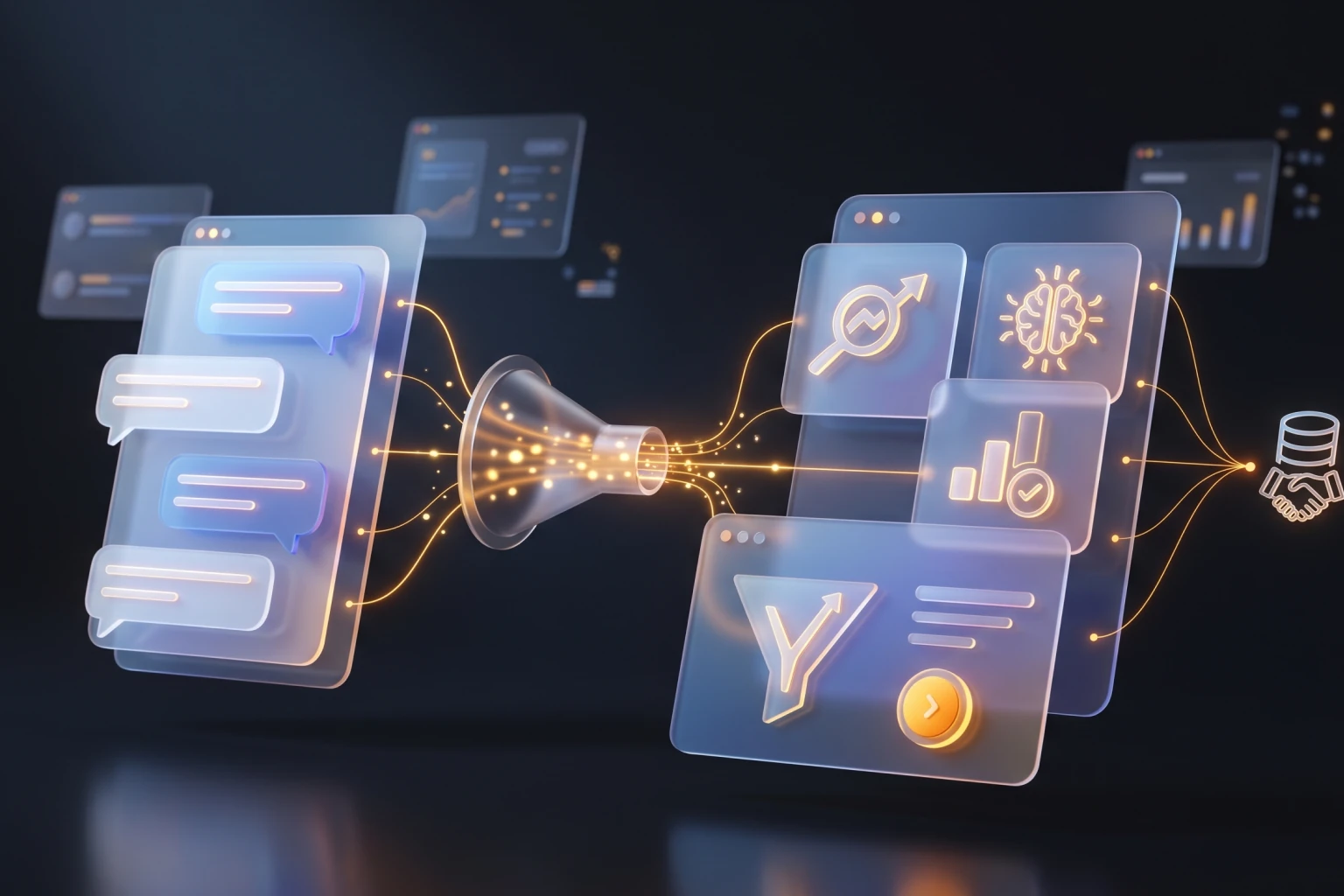
Why an AI chatbot for lead generation works for Dubai businesses
The most direct benefit of an AI chatbot for lead generation is speed. A visitor who lands on a service page at 10 PM on a Sunday and has a specific question about pricing or availability can receive an immediate, intelligent response through the chatbot rather than waiting until Monday morning for a human reply. By Monday morning, that visitor has typically contacted two or three competitors and made a decision. The chatbot did not just answer a question — it kept the prospect engaged at the moment of decision.
The second benefit is qualification. A lead generation chatbot can ask the qualifying questions that would otherwise require a salesperson to make a call: what type of service are you interested in, what is your timeline, what is your approximate budget range, what is your company size? When these answers are captured in the chatbot conversation and passed to the CRM alongside the contact details, the salesperson who follows up has full context before making the first call. The conversation starts at a higher level of specificity because the basic qualification is already done.
The third benefit is volume handling. During high-traffic periods — after a successful campaign launch, following a Google ranking improvement, or during peak inquiry periods — the chatbot handles every concurrent conversation without degradation. A human sales team answering the same volume of simultaneous inquiries would inevitably leave some prospects waiting.
What a lead generation chatbot should do differently from a support chatbot
A support chatbot is designed to resolve the visitor’s question and close the conversation. A lead generation chatbot is designed to qualify the visitor and capture their contact details for sales follow-up. These are different objectives that require different conversation design.
A lead generation chatbot should: engage visitors proactively on high-intent pages rather than waiting to be initiated, ask structured qualifying questions rather than open-ended support questions, provide enough value in the conversation to justify the contact detail request, capture name, email, phone, and the key qualifying information, create a CRM record with all captured data immediately, and trigger a sales task or notification for immediate human follow-up.
A support chatbot does none of this systematically — it resolves inquiries and closes tickets. The conversation design, trigger logic, and CRM integration requirements are therefore different, and businesses that deploy a support chatbot on a lead generation page and wonder why it is not producing pipeline value are using the wrong tool for the use case.
Where to deploy a lead generation chatbot in Dubai
Service pages and landing pages
The highest-value deployment location for a lead generation chatbot is on the pages where buying intent is highest: service pages, pricing pages, and dedicated campaign landing pages. A visitor on a service page is actively evaluating the service. A proactive chatbot engagement — “Looking for [service]? I can help you understand if it’s the right fit” — meets the visitor at exactly the right moment in their decision process.
For pages receiving traffic from PPC campaigns, a chatbot that captures leads who do not complete the static form provides a second conversion path. Some visitors prefer a conversation to a form — they have questions that are not addressed by the page content and they want an immediate answer rather than a call tomorrow. The chatbot serves this audience while the form serves the visitor who is ready to submit without a conversation first.
WhatsApp for UAE lead generation
WhatsApp is the dominant communication channel for most UAE business and consumer interactions. A lead generation chatbot deployed through the WhatsApp Business API engages prospects in the channel they already prefer, which reduces friction compared to asking them to complete a website form. For Dubai businesses where a significant portion of incoming inquiries arrive through WhatsApp rather than web forms, an AI chatbot on WhatsApp can qualify, capture, and route those leads automatically rather than requiring a human to be available for every incoming message.
LinkedIn and social messaging
For B2B Dubai businesses generating leads through LinkedIn, automated responses to connection requests or direct messages that initiate qualification conversations can extend the lead generation chatbot model to social channels. This requires integration with LinkedIn’s messaging API and is more complex to implement, but for businesses with active LinkedIn lead generation programs it extends chatbot qualification to where the initial engagement happens rather than relying on driving all traffic to the website first.
Designing the lead generation conversation flow
The conversation flow for a lead generation chatbot should be short, specific, and value-delivering. Visitors abandon chatbot conversations that feel like a long intake form dressed up as a chat interface. The goal is to capture the minimum qualifying information while delivering enough value that the visitor feels the exchange was worthwhile — a principle backed by research on chatbot usability.
A practical conversation flow for a Dubai digital marketing agency’s lead generation chatbot:
- Opening: “Hi — are you looking to improve your business’s online visibility in Dubai?” (Yes/No buttons)
- Service interest: “What are you most focused on right now?” (SEO / Google Ads / Website / Not sure)
- Current situation: “Are you currently running any digital marketing campaigns?” (Yes, actively / Yes, but not happy with results / No, starting fresh)
- Contact capture: “Great — let me connect you with someone who can advise on your specific situation. What’s your name and best email or WhatsApp number?”
- Confirmation: “Thanks [Name] — someone from our team will be in touch within a few hours. In the meantime, here’s [relevant resource based on their stated interest].”
This five-step flow captures name, contact details, service interest, and current marketing situation — everything the salesperson needs for the first qualified conversation — without feeling like an interrogation.
Connecting the lead generation chatbot to CRM and sales workflow
| Chatbot action | CRM action triggered | Sales action triggered |
|---|---|---|
| Contact details captured | New lead record created with all form fields | Assignment to salesperson based on service interest |
| Service interest identified | Service interest field populated; appropriate tag added | Salesperson notified with context from chatbot conversation |
| Qualification data captured | Lead qualification fields populated | Lead score updated; high-scoring leads flagged for immediate contact |
| Conversation completed | Chatbot conversation log stored in contact record | Follow-up task created with same-day or next-morning due date |
| Conversation abandoned mid-way | Partial record created with available data | Lower-priority task created for follow-up if contact details were captured |
Measuring AI chatbot lead generation performance
A lead generation chatbot should be measured against the same metrics as any other lead generation channel: volume of qualified leads captured, lead quality rate compared to other channels, cost per lead including chatbot platform and implementation costs, and close rate of chatbot-generated leads compared to form-generated leads from the same pages.
The comparison between chatbot leads and form leads from the same pages is particularly useful for understanding whether the chatbot is adding a new conversion path or cannibalizing form completions. If total lead volume from the page increases after chatbot deployment, the chatbot is adding a new path. If total lead volume is unchanged but the mix shifts from forms to chatbot conversations, the chatbot is serving the same audience through a different interface. Both outcomes can be valuable, but they require different optimization strategies.
Ready to build an AI chatbot for lead generation in Dubai?
DevedUp Business & Marketing designs and builds AI lead generation chatbots for Dubai businesses with bilingual Arabic and English capability, full CRM integration, and conversation flows designed around the specific qualification logic of each client’s sales process. If you want to capture leads that arrive outside business hours, from visitors who prefer conversation to forms, or through WhatsApp, contact the team for a chatbot lead generation assessment.
Frequently asked questions
How does an AI chatbot generate leads for a Dubai business?
An AI lead generation chatbot engages visitors on high-intent pages, asks qualifying questions, captures contact details and qualification data, creates a CRM record, and triggers a sales follow-up task — all automatically and immediately, regardless of the time of day or the volume of concurrent visitors. It provides a second conversion path alongside static forms and can engage visitors who have questions that are not answered by the page content.
What is the difference between a lead generation chatbot and a support chatbot?
A lead generation chatbot is designed to qualify visitors and capture their contact details for sales follow-up. A support chatbot is designed to resolve existing customer inquiries and close the conversation. They require different conversation designs, different trigger logic, different CRM integrations, and different performance metrics. Deploying a support chatbot on a lead generation page will not produce lead generation results.
Should my Dubai business use a website chatbot or WhatsApp chatbot for lead generation?
Ideally, both — through different channels for different audience segments. A website chatbot captures visitors who discover the business through Google search or paid ads. A WhatsApp chatbot captures prospects who prefer to initiate contact through WhatsApp, which is a large proportion of UAE business inquiries. The two channels are complementary rather than alternatives, and both should feed into the same CRM lead management system for consistent follow-up.
How do I build an AI chatbot for lead generation?
Build it around qualification, not support. Trigger the chatbot proactively on high-intent pages, ask a short sequence of qualifying questions (service interest, current situation, timeline), capture name and contact details, and push everything to your CRM with an immediate sales follow-up task. Keep the flow short and value-led so an AI chatbot for lead generation feels like help, not an intake form.
How much does an AI chatbot for lead generation cost in Dubai?
Cost depends on channel and complexity. A website lead generation chatbot on a mainstream platform can start low, while a WhatsApp deployment adds Business API and per-conversation fees. The figure that matters is cost per qualified lead: an AI chatbot for lead generation that captures after-hours and conversation-first prospects often lowers blended cost per lead by adding a second conversion path alongside forms.