
How can US companies use SEO to win search visibility in Dubai and GCC markets?
If you run a US SaaS or service brand and you want demand from Dubai and the wider GCC, your biggest risk is assuming your US playbook will translate with a few location keywords. This reflects the broader reality of Dubai SEO, where international brands must adapt to local search behavior, competition levels, and trust signals rather than reuse generic global playbooks.
This guide breaks down how DevedUp approaches SEO services for US companies entering the UAE and GCC, with practical frameworks that connect search engine optimization experts, PPC advertising, web development, content strategy, and analytics into one operating system.
The GCC search reality: language, mobile, and trust signals
Dubai is “international,” but your organic growth still depends on how people actually search, read, and decide.
- Mobile-first isn’t optional: UAE usage is heavily mobile-connected, and DataReportal reports 23.0M mobile connections at the end of 2025, far above population due to multi-SIM behavior.
- Social discovery influences search: In the UAE, DataReportal reports 11.3M active social media user identities in January 2025. That matters because buyers often “see you” on social, then search your brand or category to validate you.
- GCC internet penetration is near-total in key markets: Saudi Arabia, for example, is reported at 99% internet penetration at the start of 2025. This increases competition because digital visibility becomes the default battleground.
So the strategy is not “rank and hope.” It’s to build trust signals across search, site experience, and content clarity while controlling CAC with PPC advertising during the ramp-up.
What makes bilingual SEO work in Dubai and the GCC?
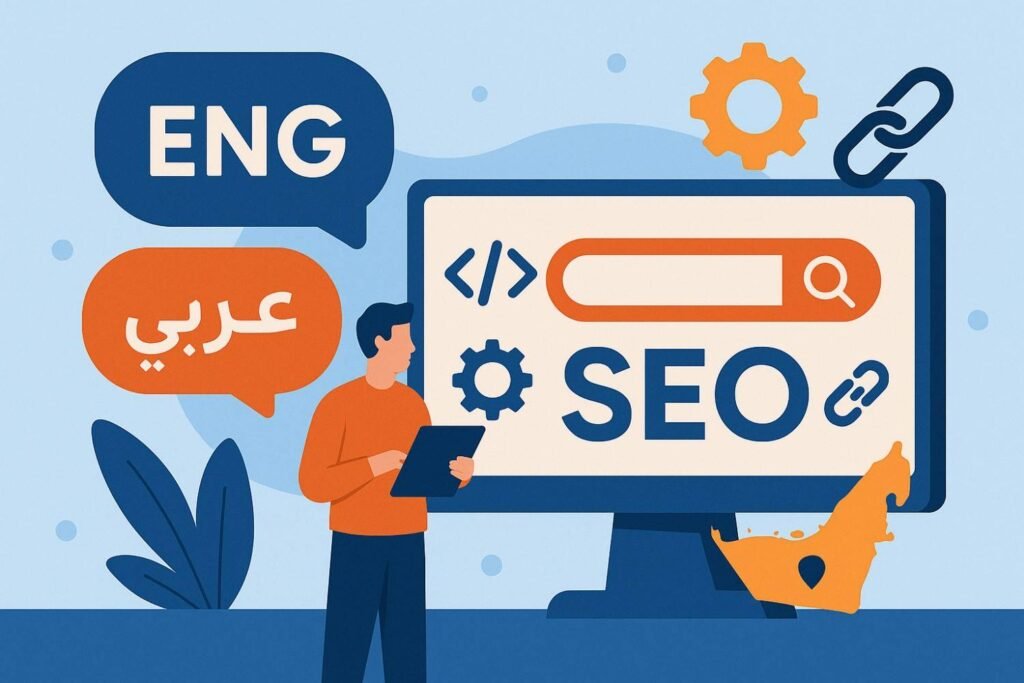
Concise answer (snippet-ready): Bilingual SEO works in Dubai and the GCC when Arabic and English pages are localized, technically mapped (hreflang + clean URL structure), and aligned to different search intents, not duplicated wording.
Key factors DevedUp uses in bilingual SEO Arabic English:
- Intent mapping by language: Arabic queries can signal different expectations (pricing sensitivity, “best” modifiers, trust questions), while English queries may skew toward comparisons, integrations, or enterprise needs.
- SERP feature targeting: Local packs, “People also ask,” and AI summaries reward structured answers and clear entity signals more than long, generic copy.
- Operational consistency: Publishing cadence, internal linking, and page templates must be consistent across both languages, or the “we have Arabic pages” promise becomes thin.
From Google’s perspective, hreflang helps them understand localized variants, but Google also notes it does not use hreflang or the HTML lang attribute to detect language; algorithms do that. That’s why on-page clarity matters as much as tags.
International SEO architecture: what to build before you publish
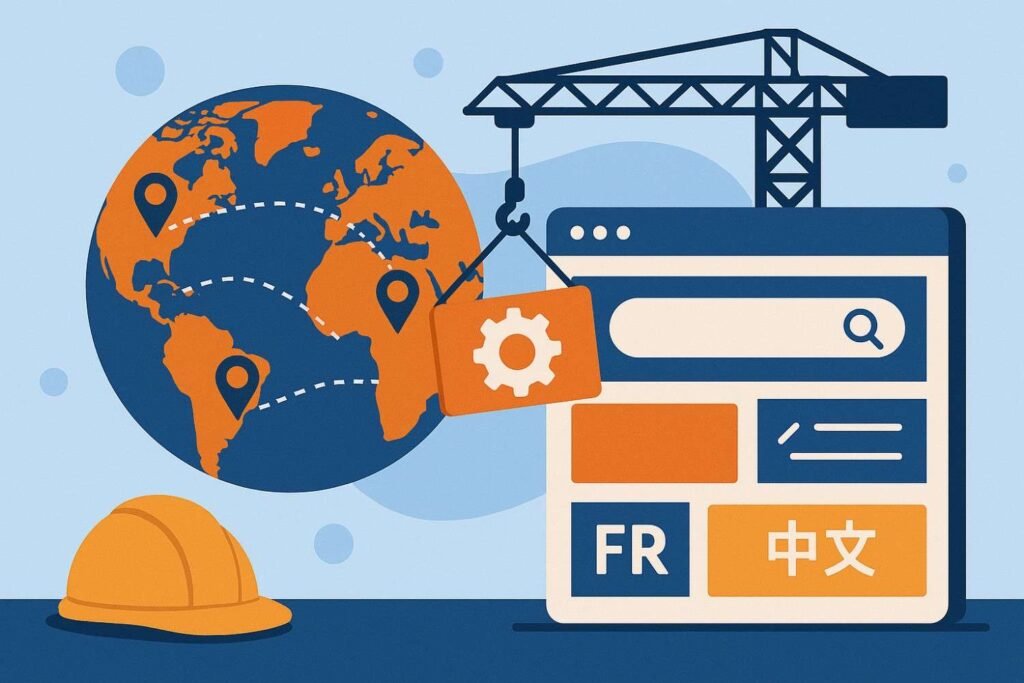
International targeting success starts with architecture. You are deciding how Google will interpret your “Dubai + GCC” presence.
Option A: Subfolders (recommended for most US SaaS)
- example.com/ae/ and example.com/sa/ or example.com/ar/ and example.com/en-ae/
- Pros: Shares domain authority, easier governance, faster indexing
- Cons: Requires strong governance to avoid duplication and mixed signals
Option B: Subdomains
- ae.example.com
- Pros: Operational separation
- Cons: Often slower authority transfer, more tracking complexity
Option C: Separate domains
- Pros: Full local branding control
- Cons: Highest cost, slowest compounding SEO, duplicate governance overhead
A practical rule: if your brand is still building awareness in the GCC, subfolders usually compound faster.
Hreflang basics that prevent “wrong language, wrong country” traffic
Google supports hreflang and continues to use it, even as Search Console’s International Targeting report has been deprecated.
If you have a global homepage that routes users, the x-default hreflang can be used for the default landing experience.
How should a US company structure Arabic and English pages for Google?
Concise answer (snippet-ready): Use separate URLs for Arabic and English, keep content equivalent in purpose (not identical in wording), connect them with hreflang, and build internal linking so both versions are discoverable without relying on auto-redirects.
A DevedUp-style structure for a US SaaS targeting Dubai:
- Language and region clarity
- English UAE: /en-ae/
- Arabic UAE: /ar-ae/
- If you target KSA separately, add /en-sa/ and /ar-sa/
- Page template parity
- Same page types in both languages (product, integrations, pricing, use cases, industry pages)
- Same conversion paths (demo, consultation, WhatsApp if relevant)
- Localized, not mirrored
- Keep the promise consistent but localize examples, objections, proof, and FAQs
- Avoid “copy-paste translation” footprints that read unnatural in Arabic
- Technical guardrails
- Canonicals that match each page’s own URL
- No forced redirects based on browser language (especially harmful for indexing and user choice)
Page experience and speed: the ranking and conversion bridge
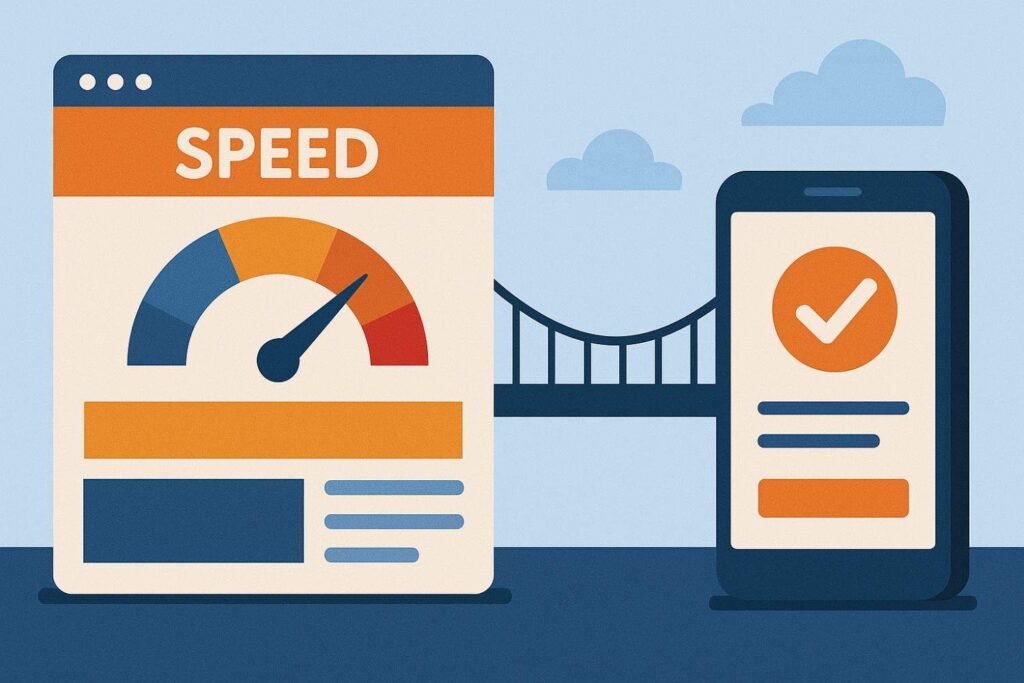
International visibility collapses fast if page experience is weak. Google’s documentation emphasizes that core ranking systems seek to reward content that provides a good page experience, and Core Web Vitals are strongly recommended for success and better UX.
For GCC targeting, this is even more sensitive because:
- mobile-first traffic dominates,
- multi-device behavior is common,
- and your first impression is usually your landing page, not your homepage.
Practical checklist DevedUp applies across WordPress, Shopify, and custom builds:
- Core Web Vitals optimization (LCP, INP, CLS)
- Image strategy: modern formats, proper sizing, lazy-loading
- CDN and caching logic that works across regions
- Script discipline: analytics, chat widgets, and tag managers loaded with intent
This is where web design and UI/UX stop being “creative” and become measurable growth levers.
Content strategy for GCC visibility: build for questions, comparisons, and proof
Most US brands underperform in GCC organic because they publish “thought leadership” that doesn’t connect to local search intent. For e-commerce and product-led brands entering Dubai and the GCC, proven e-commerce SEO best practices in Dubai, UAE, and GCC countries are essential to structure category pages, optimize product visibility, and enhance search-led conversions. The fix is to build content clusters that answer what buyers actually ask.
Google’s guidance on creating helpful, reliable, people-first content is a useful filter here: content should be made to benefit people, not to manipulate rankings.
The cluster that works for US SaaS targeting Dubai
- Pillar: “Solutions in UAE/GCC” (the non-salesy overview, markets, compliance, deployment)
- Cluster: “Use case + region + outcome”
- “CRM for real estate teams in Dubai”
- “Patient acquisition funnels for clinics in Abu Dhabi”
- “E-commerce retention strategy for GCC shoppers”
- Support: Comparisons and operational FAQs
- “Arabic vs English landing pages: what converts better in Dubai?”
- “Hreflang mistakes that stop GCC pages from ranking”
- “How to measure pipeline from UAE search traffic”
AEO implementation without relying on restricted schema
Many teams try to force FAQ schema everywhere. Google’s FAQPage structured data has content guidelines and isn’t universally appropriate for every site type.
A safer, future-proof approach is:
- Add question-style H2s with short, direct answers
- Use bullets and step formats that AI and voice systems can quote cleanly
- Mark up only what matches Google’s guidelines and what is actually visible on the page
How can PPC advertising accelerate GCC pipeline while SEO matures?
Concise answer (snippet-ready): Use PPC to validate messaging and conversion paths, then feed those learnings into SEO page templates and content clusters, reducing long-term CAC while improving lead quality.
International SEO compounds, but it takes time. PPC advertising is your controlled test environment.
A DevedUp execution model:
- Stage 1: Market validation
- Test Arabic vs English ad groups separately
- Validate which objections dominate: pricing, trust, implementation, compliance, support hours
- Stage 2: Landing page iteration
- Build two or three landing variants with distinct positioning
- Track micro-conversions (scroll depth, CTA clicks, form starts)
- Stage 3: SEO handoff
- Convert winning PPC structures into SEO pages:
- “Dubai use case” pages
- “Industry” pages
- “Comparison” pages
- Convert winning PPC structures into SEO pages:
- Stage 4: Retargeting and lifecycle
- Retarget search visitors on social
- Use email marketing to move leads to demo readiness
This is where analytics and reporting becomes the difference between “ads spent” and “pipeline built.”
Case-based insights from DevedUp’s portfolio
The goal here isn’t to claim magic results. It’s to show the mechanics of what works, based on real delivery experience in the UAE and international markets.
Al Safwa Medical Center: local visibility plus patient trust loops
For Al Safwa Medical Center in Abu Dhabi, DevedUp’s work combined SEO services with consistent social content and a bilingual website experience. The growth driver in a clinic context is not “traffic,” it’s qualified intent:
- service-page structure designed around high-intent searches,
- content that answers treatment questions clearly,
- UI/UX that reduces booking friction,
- and social content that creates recognition, then search demand.
This model matters for US healthcare SaaS targeting GCC clinics too: your content must reduce perceived risk and show operational clarity, not just features.
Belas Store: Shopify execution plus performance discipline
Belas Store is a practical example of how a commerce brand needs integrated execution:
- Shopify build decisions that protect speed and conversion,
- content aligned to category intent,
- and paid campaigns that test offer framing and audience fit.
If you are a US e-commerce or subscription brand entering GCC, the lesson is simple: you cannot separate “store build” from “traffic acquisition.” Your Shopify setup, checkout UX, and tracking stack determine how efficiently PPC advertising converts.
Branding and positioning: the GCC nuance many US brands miss
GCC buyers often evaluate legitimacy faster and more directly. Branding is not a logo exercise; it’s the system of cues that answer:
- Are you credible here?
- Do you understand the market?
- Can you support me after purchase?
DevedUp’s branding approach connects:
- message hierarchy (what you lead with in English vs Arabic),
- visual consistency across site and social,
- and proof placement (testimonials, case summaries, clear process).
That is also why business consulting is part of the growth stack. You can rank and still fail if your offer, pricing model, or onboarding flow doesn’t match market expectations.
Compliance and content safety for marketing in the UAE
Marketing in the UAE requires more attention to content compliance than many US teams expect, especially for ads and public claims. UAE government resources outline media regulation and cyber safety guidance, including the active legal framework around rumors and cybercrimes.
Practical, non-legal takeaways for content and ad teams:
- Keep claims verifiable, especially in healthcare, finance, or regulated sectors
- Avoid cultural insensitivity, privacy violations, or exaggerated promises
- Ensure ad disclosures and permissions are handled appropriately for the channel and campaign type
If your brand operates in sensitive industries, align compliance early so SEO pages, ad copy, and social content don’t create downstream risk.
Measurement framework: how DevedUp connects SEO to revenue
International expansion fails when reporting stops at “rankings” or “traffic.”
A growth-grade reporting model tracks four layers:
- Visibility
- Impressions and clicks by country and language (Search Console)
- Indexed pages by directory and template type
- Engagement quality
- Landing page engagement by language
- CTA click-through and form start rates
- Lead quality
- Lead source mapping: organic vs paid vs referral
- Qualification rate by region
- Pipeline impact
- Opportunity creation tied to country and language
- Sales cycle length differences between UAE, KSA, and US-based leads
This is where Google Analytics (GA4), tagging discipline, and CRM integration turn marketing from “activity” into predictable growth.
A practical rollout plan for US brands targeting Dubai and GCC
To keep execution realistic, DevedUp typically structures the rollout like this:
Weeks 1 to 2: Foundation
- International site architecture decision
- Tracking stack setup (GA4, events, conversions)
- Technical SEO audit and fixes that affect indexing and speed
Weeks 3 to 6: Bilingual core pages
- Build English and Arabic versions of:
- market pages (UAE, Dubai, GCC)
- top use cases
- pricing and trust pages
- Implement hreflang and internal linking
- Publish snippet-ready Q&A sections on key pages
Weeks 6 to 10: Performance validation
- Launch PPC advertising for Dubai and UAE
- Test language segmentation and landing pages
- Feed winners into SEO templates
Ongoing: Compounding engine
- Content clusters targeting comparisons and operational questions
- Continuous UX optimization based on behavior data
- Quarterly technical audits to protect growth
Conclusion
Winning visibility for a US SaaS or service brand in Dubai and the GCC comes down to disciplined bilingual execution: correct international architecture, page experience that holds on mobile, content that answers regional questions clearly, and analytics that tie every effort to qualified demand. DevedUp Business & Marketing supports that full loop across SEO services, PPC advertising, content strategy, web development, UI/UX, branding, and reporting so international growth becomes a system you can measure and improve, not a one-time launch.